
Open almost any final year project submitted at a Nigerian university and the weakest sentence in the entire document is usually in the introduction, in the one or two lines meant to state exactly what the study is about. Supervisors call it vague. Examiners ask "so what are you actually arguing?" in the defence room. And it is almost always fixable in under an hour once you understand what a thesis statement is actually supposed to do.
This guide breaks down what a thesis statement is, what makes one strong or weak, and gives you a method you can apply to your own topic right now, whether you are writing a coursework essay, a final year project, or a postgraduate dissertation. We will work through the three-part anatomy of a strong statement, show you exactly where it belongs in your introduction, walk through weak-to-strong rewrites, and finish with a checklist you can run your own sentence against before your next supervisor meeting.
What is a thesis statement
A thesis statement is a single sentence, occasionally two, that states the central claim or argument your entire piece of writing exists to support. Everything else in your introduction, your literature review, your methodology, and your findings has one job: to back up that one sentence. If a paragraph does not serve the thesis statement, it does not belong in the document.
That last point is what most students miss. The thesis statement is not just an opening formality you write once and forget. It is the spine of the entire project. When an examiner reads your conclusion and then flips back to your introduction, they are checking one thing: did the document actually deliver the claim it promised? A thesis statement you set up well in chapter one is the standard your whole project is measured against. A vague one gives the panel nothing to hold you to, which sounds safer but is actually far more dangerous, because it invites them to decide for themselves what you should have proven.
Thesis statement vs statement of the problem vs objectives
In a Nigerian final year project, the introduction chapter usually contains several distinct elements that students often confuse with one another: the background, the statement of the problem, the aim and objectives, the research questions, and the thesis statement or central argument. They are related but they are not the same thing, and mixing them up is a common reason a proposal gets sent back.
- Statement of the problem: describes what is wrong, missing, or unresolved in the real world or in existing research. It sets up the need for your study.
- Aim and objectives: state what you intend to do about that problem. The aim is the broad goal; the objectives are the specific, achievable steps.
- Research questions: the specific questions your study will answer, usually mirroring your objectives.
- Thesis statement: your anticipated central claim, the position your study is built to defend. It is the answer you expect your evidence to support.
The simplest way to keep them straight: the statement of the problem is the question, the objectives are the plan to answer it, and the thesis statement is the answer itself. If your statement of the problem and your thesis statement say the same thing, one of them is doing the wrong job.
Why most thesis statements fail
Almost every weak thesis statement falls into one of three traps.
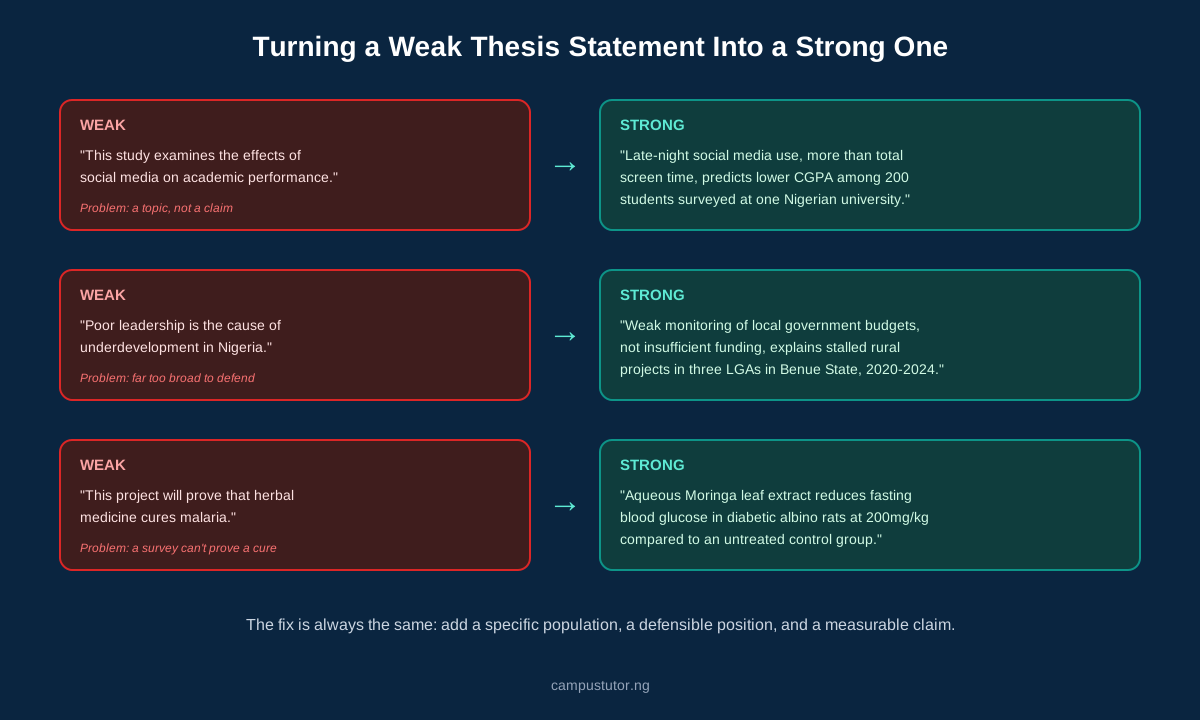
- It is a topic, not a claim. "This study examines the effects of social media on academic performance" describes a subject area. It does not commit to a position. A thesis statement has to say what you found or what you are arguing, not just what you looked at.
- It is too broad to defend in the space available. "Poor leadership is the cause of underdevelopment in Nigeria" is a claim a dozen books could not fully support, let alone a 60-page undergraduate project. Scope it down to something your actual methodology can prove.
- It promises something your methodology cannot deliver. If your thesis statement claims a causal relationship but your study is a descriptive survey, your examiner will catch the mismatch immediately. Your claim has to match what your data collection method can actually establish.
- It is so cautious it says nothing. "Social media may possibly have some effect on some students in certain circumstances" is hedged into meaninglessness. A thesis statement that cannot be disagreed with cannot be defended either, because there is nothing in it to defend.
Notice that traps one and four are opposites. One is too vague because it never commits; the other is too vague because it commits to nothing in particular. The fix for both is the same: say one specific, arguable thing.
How to write a thesis statement in your introduction
A strong thesis statement has three working parts: the problem or focus area, the position or proposed solution, and the scope or measure of success. You do not need to label these parts in your writing, but if all three are present, your statement will almost always hold up.
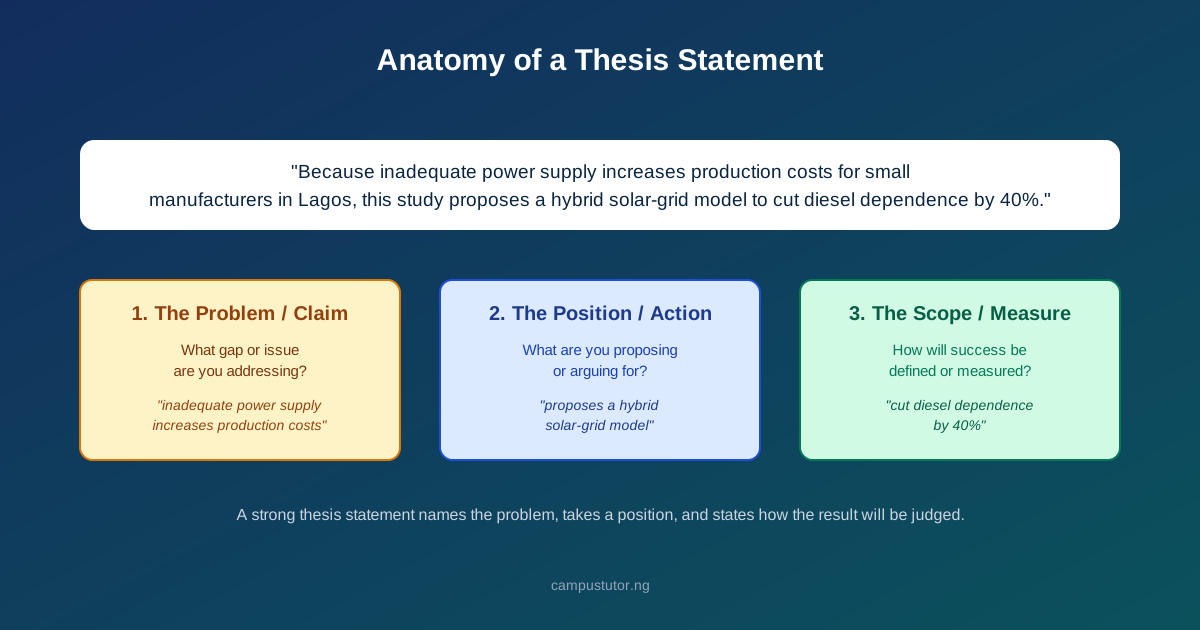
Where exactly the thesis statement goes
Your introduction should work like a funnel. It opens wide with the general context, narrows to the specific gap or problem in existing work, states what your study sets out to do, and then arrives at its narrowest, sharpest point: the thesis statement. By the time the reader reaches it, they should already understand why it matters. Place it at or near the end of your introduction, never buried in the middle of a background paragraph.
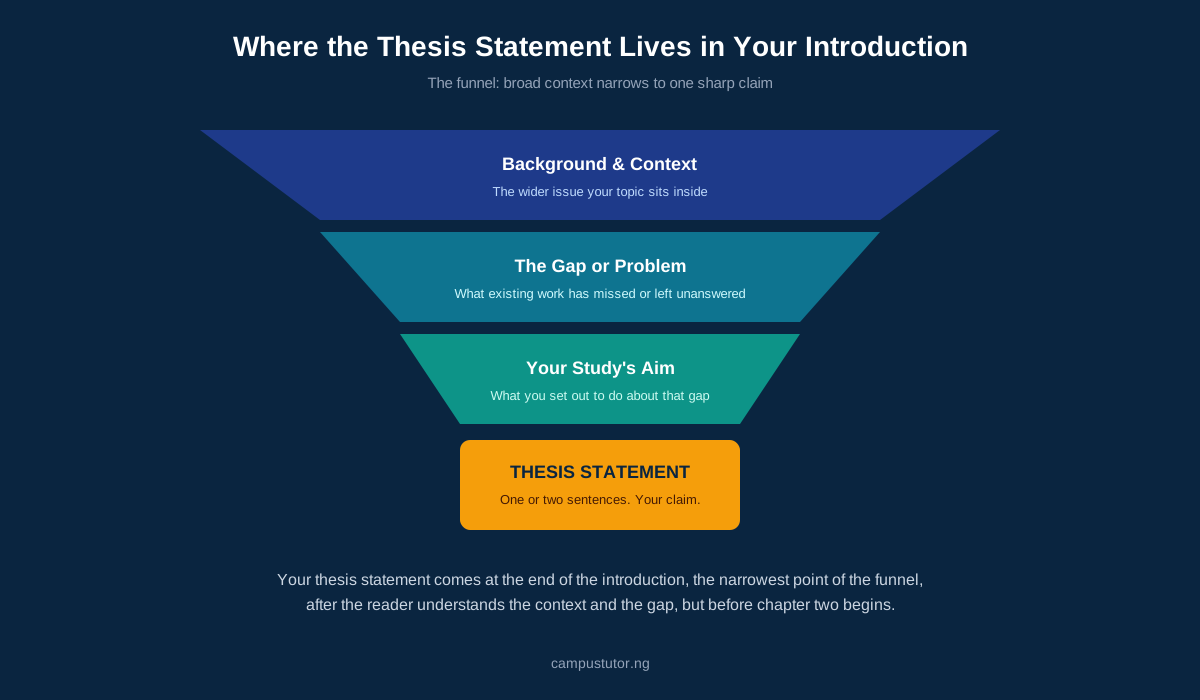
- Start with the gap or problem your study responds to. What is missing, broken, or under-examined?
- State your position or what your study proposes, builds, or argues. This is the part that turns a topic into a claim.
- Add the scope: how will the result be judged, measured, or limited? A number, a boundary, or a specific outcome makes your claim concrete instead of aspirational.
- Write the full sentence, then cut every word that does not serve one of those three jobs.
Thesis statement example, weak vs strong
Seeing the difference in practice makes this easier to apply to your own topic.
- Weak: "This research is about the use of mobile money in Nigeria." (a topic, not a claim)
- Strong: "Limited agent liquidity, not consumer distrust, is the primary barrier to mobile money adoption in rural Kwara State, as shown by transaction-failure data collected from 40 agent locations between January and March 2026."
- Weak: "Examination malpractice is a serious problem in Nigerian secondary schools." (true, but unfocused and undefendable as written)
- Strong: "Inadequate invigilator training, more than student dishonesty, accounts for the majority of examination malpractice incidents recorded across five secondary schools in Enugu State between 2023 and 2025."
The pattern in every strong example is the same. There is a specific population or setting, a position that picks one explanation over another ("X, not Y" or "X, more than Y"), and a concrete reference to the evidence that backs it. The diagram below shows three more weak-to-strong rewrites side by side, including a science example, so you can see the transformation applied across different kinds of projects.
How long should a thesis statement be
One sentence is the ideal. Two is acceptable when your claim genuinely has two parts, for example a main argument and a stated method. Three or more sentences usually means you have not yet decided what your single most important claim is, and you are listing several candidate arguments instead of committing to one.
If your draft runs long, the problem is rarely the word count itself. It is that you are trying to say too many things at once. Pick the one claim your evidence most directly supports and make that your thesis statement. Everything else can live in your objectives or your discussion chapter.
How to test your thesis statement before your supervisor sees it
Before you take a draft thesis statement to your supervisor, run it through three quick tests. They take two minutes and they catch most of the problems supervisors would otherwise flag for you.
- The disagreement test. Could a reasonable person read your statement and disagree with it? If nobody could possibly argue the opposite, your statement is a fact or a topic, not a thesis.
- The evidence test. For every claim in your statement, can you point to the specific data, source, or method that will support it? If you cannot, either the claim is too ambitious or your methodology needs rethinking.
- The repeat-back test. Read your statement to a coursemate once, then ask them to tell you what your project argues. If they can repeat the core claim accurately, it is clear. If they hesitate or paraphrase it into something vaguer, it is not.
Thesis statement checklist before you move on
- Does it make a claim, not just announce a topic?
- Could someone reasonably disagree with it? If not, it is probably too obvious to be a thesis.
- Can your chosen methodology actually support or test this claim?
- Is it narrow enough to be fully argued within your page or word limit?
- Would your supervisor be able to repeat your thesis statement back to you after reading it once?
Where to go next
If you want worked examples grouped by faculty, see our companion guide on thesis statement examples by faculty across sciences, social sciences, humanities, and education. If you are unsure whether your essay needs an argumentative thesis statement or a simpler informative one, our guide on thesis statements for informative vs research essays covers exactly that distinction. And if you are just getting started and the whole final year project still feels overwhelming, our beginner's guide to writing your first thesis statement starts from zero.
Once your thesis statement is solid, the cost, timeline, and AI-assistance questions that come next are covered in our complete guide to writing your thesis in Nigeria and our honest breakdown of thesis writing services in Nigeria.
A vague thesis statement is not a small problem you fix later. It is the crack that runs through every chapter you build on top of it.— CampusTutor Editorial
Share this article