
If you are staring at a blank document with a project topic at the top of the page and no idea what to write next, you are not behind. Almost every Nigerian final year student hits this exact wall, and it is almost always at the same point: the thesis statement. Nobody explained what it actually is in a way that made sense, so it feels like a vague academic ritual instead of a sentence you can just write.
This guide assumes you have never written a thesis statement before and walks through it in plain language, no jargon left unexplained.
How do you start to write your thesis statement
You start by reading, not writing. Before you can state a claim about your topic, you need to know what other researchers have already found and where the gaps are. Spend a week reading ten to fifteen sources closely related to your topic before you try to write a single sentence of your thesis statement. Trying to write it cold is the single biggest reason students get stuck.
- Pick a topic that is specific enough to research in the time you have, not a broad subject area.
- Read enough sources to know what has already been studied and what has not.
- Identify one gap, disagreement, or under-examined angle that your project could realistically address.
- Turn that gap into a single sentence that states your position and how you will support it.
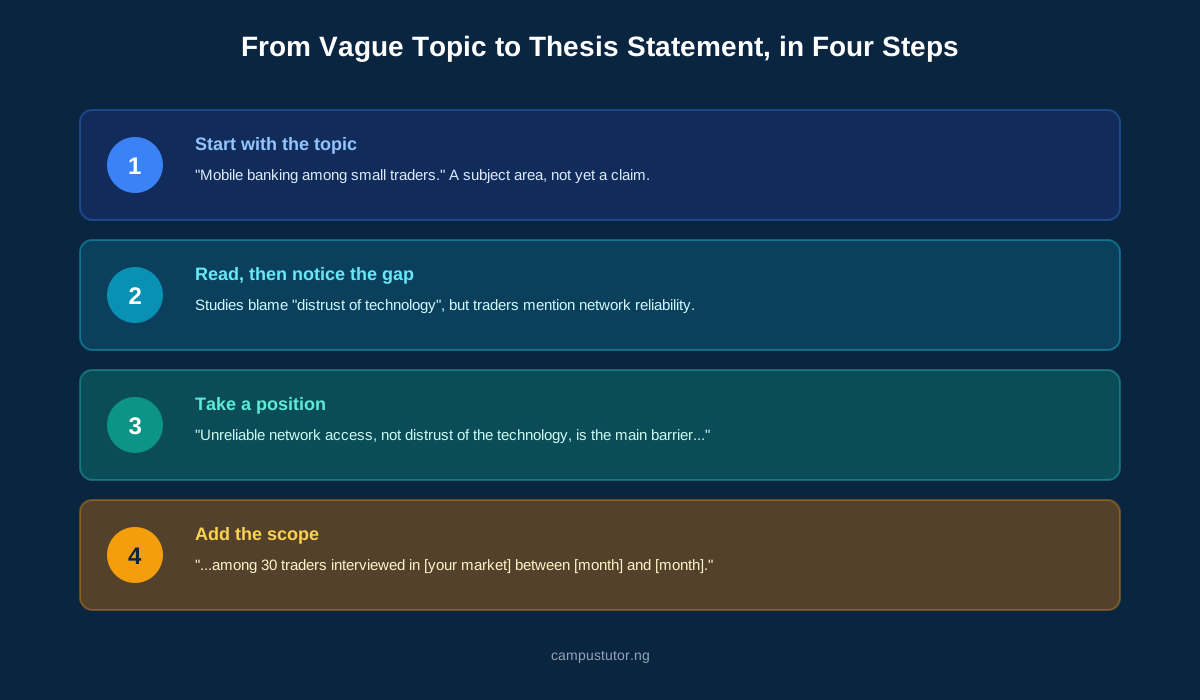
That sequence matters. Each step depends on the one before it, and skipping ahead is what leaves students staring at a blank page. The four-step path below shows the same progression with a real example, from a vague topic to a finished thesis statement.
How to pick a topic that can become a thesis statement
A lot of thesis statement trouble actually starts one step earlier, at the topic. Some topics simply cannot be narrowed into a defensible single-sentence claim within an undergraduate project, and choosing one of those guarantees you will struggle no matter how hard you work on the wording.
- Good sign: you can name a specific place, group, or time period your study will focus on.
- Good sign: there is data you can realistically collect or access within your timeframe and budget.
- Warning sign: the topic could be the title of an entire textbook. It is too broad.
- Warning sign: answering it would require data nobody could reasonably get, like nationwide figures you have no way to gather yourself.
What is a thesis statement, explained simply
Strip away the academic language and a thesis statement is just the answer to the question: "What is this project actually trying to prove?" If you cannot answer that question in one sentence, you are not ready to start writing your chapters yet, and that is completely normal at this stage. It just means you need to go back and read a bit more, or narrow your topic further.
A simple example to copy the pattern from
Suppose your topic is mobile banking adoption among small traders in your local market. Here is roughly how the thinking progresses from a vague topic to a usable thesis statement.
- Step 1, the topic: "Mobile banking among small traders."
- Step 2, after reading: you notice most existing studies blame distrust of technology, but the traders you have spoken to mention something different, network and agent reliability.
- Step 3, the claim: "Unreliable network access, not distrust of mobile banking technology, is the main reason small traders in [your market] have not adopted mobile payment systems."
- Step 4, add scope: "...based on interviews with 30 traders conducted between [month] and [month]."
A second example, from a different field
The same pattern works in any discipline. Say you are in Education and your topic is reading skills in primary schools. Here is the progression again.
- Step 1, the topic: "Reading skills among primary school pupils."
- Step 2, after reading: most studies focus on teaching methods, but the schools near you all share something else, very few have a functioning library.
- Step 3, the claim: "Lack of access to reading materials, more than teaching method, explains weak reading skills among primary four pupils in [your area]."
- Step 4, add scope: "...based on a comparison of pupils in two schools, one with a stocked library and one without, over a single term."
Notice that the structure is identical to the mobile-banking example. A topic, a gap noticed through reading and observation, a position that picks one explanation over another, and a stated scope. Once you have seen the pattern twice, you can run it on your own topic.
Common beginner mistakes
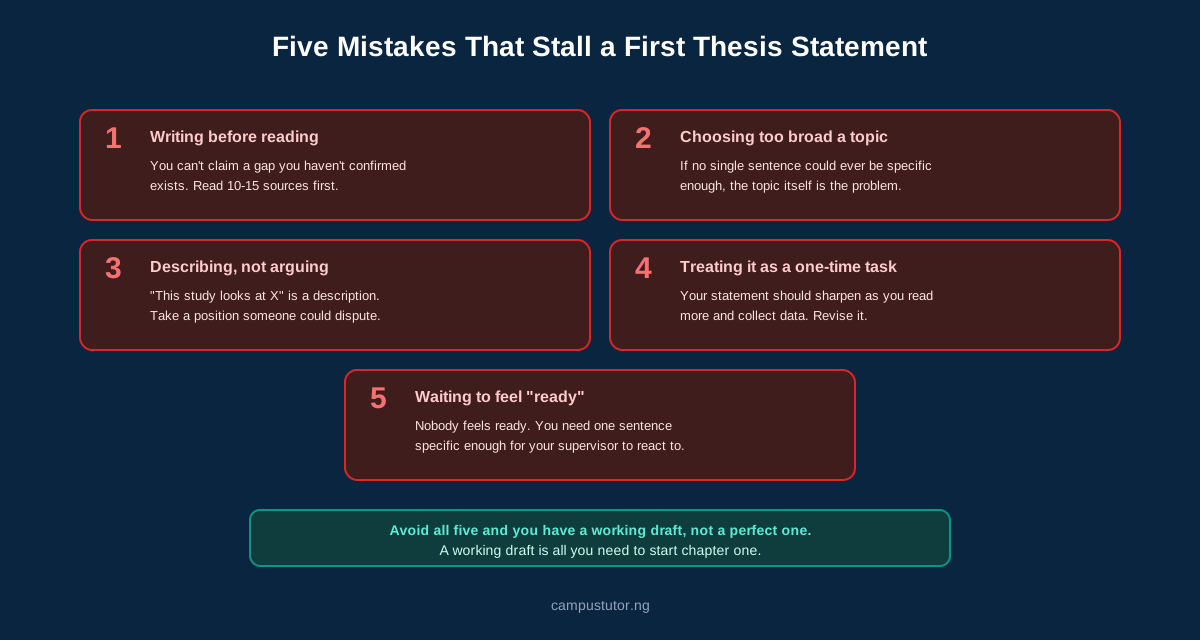
- Trying to write the thesis statement before doing any reading. Write it after, not before.
- Choosing a topic so broad that no thesis statement could ever be specific enough to defend it.
- Describing the topic instead of taking a position on it.
- Treating the thesis statement as a one-time task instead of something you revise as your understanding of the topic improves.
- Waiting until you feel completely ready, which never happens, instead of drafting something specific enough to react to.
What to do when you are completely stuck
Sometimes you have read, you understand your topic, and the sentence still will not come. When that happens, stop trying to write the perfect statement and try these instead.
- Finish this sentence out loud: "I think that ___, because ___." Whatever fills those blanks is the raw material for your thesis statement.
- Write down the question your project answers, then write the answer underneath it. The answer, tightened into one sentence, is your thesis statement.
- Describe your topic to a friend and ask them what they think you are arguing. Their summary is often clearer than your own draft.
- Take any example from a guide like this one and rewrite it with your own variables. Working from a template is not cheating; it is how the structure becomes familiar.
You do not need to get it perfect on the first try
Almost no thesis statement survives unchanged from the proposal stage to the final submission. As you read more, collect data, and talk to your supervisor, your thesis statement will get sharper. The goal at the beginning is not perfection. It is having something specific enough to start building chapter one around, and to give your supervisor something concrete to react to.
Once your thesis statement feels solid, the next questions most beginners have are about timelines, cost, and whether AI tools can help. Our complete guide to writing your thesis in Nigeria covers all of that honestly.
You do not need to feel ready to start. You need one sentence specific enough to react to. Everything else follows from that.— CampusTutor Editorial
Share this article