
A lecturer asks for a thesis statement. You write one. It comes back marked down, not because the sentence is badly written, but because it was the wrong kind of thesis statement for the assignment. This mismatch happens constantly, because informative essays and research papers ask your thesis statement to do two genuinely different jobs.
Get the type right and the rest of the assignment tends to fall into place, because the thesis statement dictates how you organise everything that follows. Get it wrong and you can write beautifully and still lose marks, because the structure your statement promised does not match the structure your assignment required. This guide shows you how to tell which type you need, what each one looks like, and how to convert one into the other when you have drafted the wrong kind.
What an informative essay thesis statement does
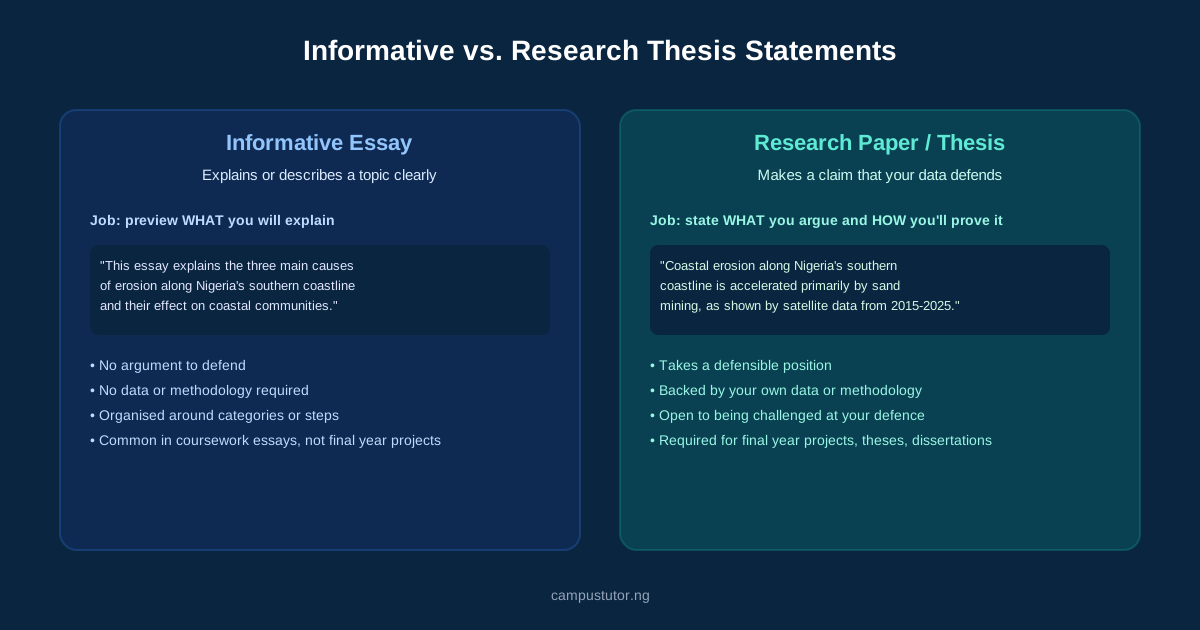
An informative essay exists to explain or describe a topic clearly, not to argue a position. Its thesis statement previews what the essay will cover, without taking a side or making a claim that could be disputed.
- Example: "This essay explains the three main causes of erosion along Nigeria's southern coastline and their effect on coastal communities."
- Job: tell the reader what categories, steps, or aspects you will cover.
- No argument required. Nobody should be able to disagree with an informative thesis statement, because it does not take a position.
What a research paper thesis statement does
A research paper or thesis exists to make and defend a claim using evidence you gather yourself. Its thesis statement states that claim directly, and the rest of the paper exists to support it.
- Example: "Coastal erosion along Nigeria's southern coastline is accelerated primarily by sand mining, as shown by satellite data from 2015 to 2025."
- Job: take a position that your methodology and data are responsible for proving.
- Argument required. A reader should be able to imagine someone disagreeing, and your paper exists to convince them otherwise.
The key differences at a glance
The two types differ on more than just whether they take a position. They differ in purpose, in how they are organised, and in what counts as success.
- Purpose: informative essays explain so the reader understands; research papers argue so the reader is convinced.
- Disagreement: nobody should disagree with a good informative thesis; everyone should be able to imagine disagreeing with a research thesis.
- Evidence: informative essays draw on established, well-known information; research papers rely on evidence you gather or analyse yourself.
- Structure: informative essays are organised by topic, category, or step; research papers are organised around building a case for the claim.
- Success: an informative essay succeeds if the reader understands; a research paper succeeds if the reader is persuaded the claim holds.
How to tell which one your assignment needs
Three checks settle it almost every time. Work through them in order.
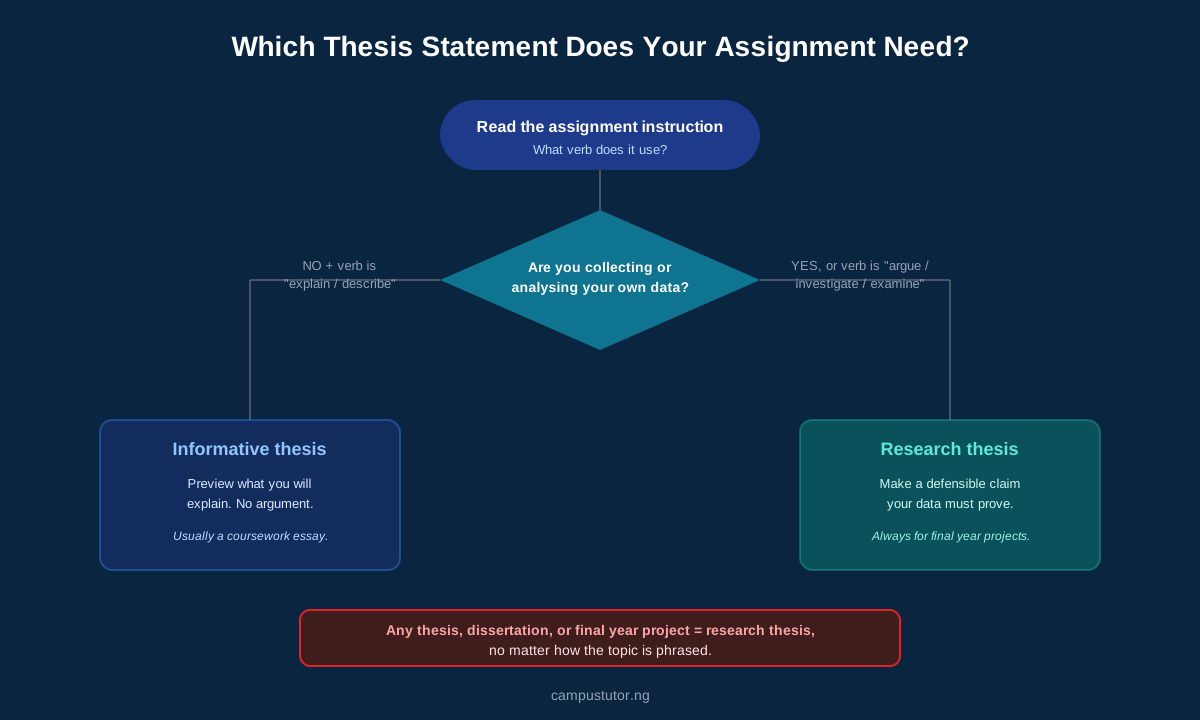
- Check the instruction verb. "Explain," "describe," or "discuss the various causes of" usually signals an informative essay. "Argue," "investigate," "determine the extent to which," or "examine the relationship between" signals a research paper.
- Check whether you are collecting or analysing your own data. If your assignment requires a survey, an experiment, secondary data analysis, or a literature-based argument, you need a research paper thesis, not an informative one.
- Check your department's expectations. Any final year project, thesis, or dissertation submitted at a Nigerian university or polytechnic requires a research paper thesis statement, regardless of how the topic is phrased. A final year project is never purely informative.
Why getting the type wrong costs you marks
When your thesis statement type does not match the assignment, the damage is structural, not cosmetic. If you write an informative thesis for a paper that needed an argument, your essay will read as a summary, and the marker will note that you described the topic but never actually argued anything. Marking schemes for research assignments usually reserve their highest bands for analysis and argument, so a purely descriptive piece is capped well below the top marks no matter how well written it is.
The reverse mistake is rarer but also costly. If you force an argument into a genuinely informative assignment, you can end up taking a contentious position the assignment never asked for and then failing to support it, which reads as overreach. Matching the type to the task is the single cheapest way to protect your grade.
Converting one into the other
If you have written an informative-style thesis statement but your assignment actually needs a research paper thesis, the fix is usually to take a stance on which cause, factor, or explanation matters most, and to specify how you will support that stance. The move is the same every time: find the neutral description and replace it with a position.
- Informative: "This study examines the factors affecting students' use of e-learning platforms in Nigerian universities."
- Converted to research: "Inconsistent internet access, more than student attitude, is the primary barrier to e-learning platform adoption among undergraduates surveyed at two Nigerian universities."
- Informative: "This essay discusses the causes and effects of rural-urban migration in Nigeria."
- Converted to research: "Lack of access to farmland, more than the appeal of city life, drives rural-urban migration among young people in three communities in Benue State."
- Informative: "This paper looks at the role of social media in Nigerian political campaigns."
- Converted to research: "Social media shaped voter turnout among first-time voters more than traditional rallies during the 2023 elections in Lagos State, based on a post-election survey."
What about assignments that need both
Some assignments genuinely combine the two. A term paper might ask you to first explain a concept and then argue a position on it. In those cases your thesis statement should still be the argumentative one, the claim, because that is the harder and more heavily weighted part. The explanatory material becomes the groundwork that leads up to it, not the destination.
If you are ever unsure, default to the research thesis. An argumentative claim can always include explanation along the way, but a purely informative statement cannot suddenly produce an argument it never set up. Building toward a position is the safer structural choice almost every time.
Share this article